Autoencoder
An autoencoder is a type of artificial neural network that is designed to learn efficient representations of input data without the need for explicit labels. It is called an "autoencoder" because it learns to encode and then decode the input data, reconstructing it as accurately as possible.
Here's how it works:
1. Encoding: The autoencoder takes an input data, let's say an image, and passes it through a series of hidden layers. These hidden layers gradually reduce the dimensionality of the input data, creating a compressed representation called the "latent space" or "encoding." This encoding is a condensed version of the input data, capturing its most important features.
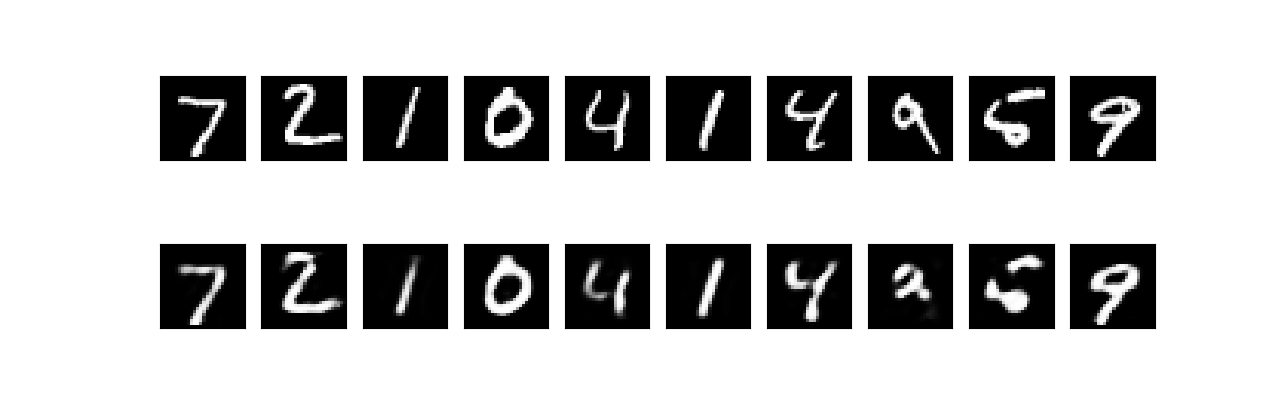
2. Decoding: The compressed encoding from the previous step is then passed through another set of hidden layers, which gradually reconstruct the original input data. The output of the decoding process should ideally be as close to the original input as possible.
3. Training: During the training phase, the autoencoder is fed with input data and it learns to minimize the difference between the original input and the reconstructed output. This is done by adjusting the weights and biases of the network using a process called "backpropagation."
The goal of the autoencoder is to learn a compressed representation of the input data that captures its essential features. By doing so, it can effectively learn to denoise data, remove redundant information, or even generate new data similar to the training examples.
Autoencoders have various applications, such as data compression, anomaly detection, dimensionality reduction, and image generation. They can also be used as a pre-training step for other machine learning models by learning useful features from unlabeled data, which can then be used for supervised learning tasks.
In summary, an autoencoder is a neural network that learns to compress input data into a lower-dimensional representation and then reconstructs it, aiming to capture the most important features of the data.